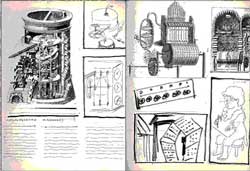
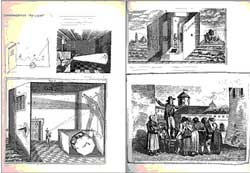
The Epic of Western Culture - Dummy Synopsis
An Illustrated History of Western Art and Culture for the New Millenium.
As we approach the end of the 20th century and the beginning of the 3rd millenium, it is time to take stock of the values and forces that have shaped the destiny of Western civilization from prehistory to the present day, from the Old World to the New World and beyond.
A collection designed for readers who know that the lessons of the past are the best introduction to the future.
This series of ten volumes will present a chronological survey in words and in pictures of Western values as expressed in the arts, ideas and institutions that form the legacy of Western man to the world. A truly epic human adventure through time and space that is characterized by extremes, contradictions and dynamic oppositions – between Man and God, Matter and Spirit, Utopia and Armageddon, Tyranny and Freedom, Despair and Faith – as well as a constant search for new horizons.
The concept of the collection is thematic and highly visual (70% illustrations, 30% text). Each volume is written by a leading authority and prepared in collaboration with an international team of top specialists.
Themes and suggested titles:
I. Ways and Means of Communication: Between Eden and Babel, by Umberto Eco
II. Conquests and Utopias: The Dream of Conquest, by Hélène Ahrweiler
III. The Sacred and the Profane: The Age of Reason, by Leszek Kolakowski
IV. Money and the Wheels of Fortune: The Midas Touch, by David Landes
V. The Image of Man, Woman and the Child: The Western Family, by Harry Peeters
VI. Apocalypse Now or Later: The Challenge of Fear (author undetermined)
VII. Coats of Arms, Codes of Honor: The Way of the Warrior, by Rudolf von Thadden
VIII. Civilization and the Environment: Birth of the City, by Lord Asa Briggs
IX. Feasts, Fasts and Passages: Rituals, by Joseph Rykwert
X. Science and the Way of the West: Dawn of a New Millenium (author undetermined)
Description:
Size: 230 x 305 mm
Length: 288 pages
Illustrations: between 400 and 500
Text, captions and index: approx. 100,000 words
Volume I
Between Eden and Babel, by Umberto Eco
Western civilization, which originated the concepts of historical development, cultural transformation, and political and linguistic differentiation, was formed from the common core of the Greco-Roman world. Although the history of the West is one of increasing fragmentation into nation states, each with its own language, the dream of European unification lives on. Between Eden and Babel, utopian unity and chaotic diversity, lies the way of the West.
Volume II
The Dream of Conquest, by Hélène Ahrweiler
From the sailors of the Argo in search of the Golden Fleece to the three ships of Columbus and the discovery of the New World, from the Mayflower to the Moon landings, from Alexander to Napoleon, from the Crusades to the Conquistadors, the epic of Western civilization is one of unending conquests and quests for a better world.
Volume III
The Age of Reason, by Leszek Kolakowski
Pagan magic, Greek logic, Roman law, Jewish monotheism, Christian love, these are the five pillars of Western civilization. From the Stone Age to the Nuclear Age, from the earliest cave paintings to the video clips of today, there has been a constant duality: the irrational belief in a sacred order and the rational mastery of reality.
Volume IV
The Midas Touch, by David Landes
Man created money in his own image and the wheels of Fortune have been turning ever since: Mammon, the Golden Calf, the legendary treasures of Midas and Crœsus, Christian asceticism, the merchants of Venice, money moralized by the work ethic, the ideal of the free market. Money in the West has been a source of both good and evil, an object of both love and hate, and the prime mover of destinies and dynasties.
Volume V
The Western Family, by Harry Peeters
In ancient times, the wise old man and the youthful hero were equally revered, while the image of woman hovered between goddess, mother, and temptress. In the Middle Ages, the monk and the witch embodied the extremes of formal learning and the transmission of traditional knowledge. The secularization of Western society created an opening for new relationships between men and women, and between the young and the old.
Volume VI
The Challenge of Fear
Western humanity has had its share of catastrophes and calamities, both natural and man-made: plagues, floods, earthquakes, wars, persecutions, and now the destruction of the natural environment. It is no wonder that Western man was given the revelation of the Apocalypse, and that he fell prey to Temptation, Anxiety, and the dark forces of the Unconscious. The Old World and the New, however, were built on the domination of fear.
Volume VII
The Way of the Warrior, by Rudolf von Thadden
If might makes right, Chivalry, with its codes of honor and courtly love, is the positive side of Western warrior. Chivalry involves not only virtue but also rivalry, the struggle for excellence. The captains of war and the captains of industry, the White Knights of old and those of today fight the same fight.
Volume VIII
Birth of the City, by Lord Asa Briggs
The city is closely tied with the development of Western values and institutions. The great periods of Western history could be symbolized by the names of cities: Athens, Rome, Jerusalem, Constantinople, Kiev, Amsterdam, Paris, Vienna, Berlin, New York. The lost paradise of the rural world has had its champions too, from Rousseau to Thoreau. The “back to nature” movements of the Age of Industrialization continue today in the concern for ecology and the environment.
Volume IX
Rituals, by Joseph Rykwert
The Western rituals that mark the passages in life and the passage of the seasons come from Greco-Roman antiquity and Jewish traditions transformed by Christianity. Feasts and festivals have lost their sacred character as a form of communication with the gods, but they answer an essential need for human communion: rock concerts, mass spectator sports, and the Olympic games have become barometers of the social and geopolitical climate.
Volume X
The Dawn of a New Millenium
Science as a field on inquiry and the basis for technological advancement is a specificaly Western invention. Between Euclid and Einstein runs the idea that the Universe has an order that can be expressed in rational, mathematical terms - and possibly mastered. Two great currents of thought dominate, the pragmatism and empiricism of the Anglo-Saxon world (Hobbes, Russel, Gödel) and the metaphysical tendencies of philosophers from Kant to Heidegger.
Volume I
Between Babel and Eden, by Umberto Eco
I. The Big Bind: the One from the Many
1. God in the Image of Man
2. The Greeks and the Barbarians
3. The Birth of the Modern Alphabet
4. Aristotle, Pythagoras and Plato
5. The Harmony of the Universe
II. Apollo and Dionysos
6. Life in Order: the Founding of Cities
7. Speech and Signs
8. Rhetoric, or the Art of Persuasion
9. Theater and Poetry
III. The Ideal Man and the Monster
10. The Decline and Fall of Latin
11. The Ideal and the Unreal
12. Back to Babel: the Discovery of New Worlds
13. The Crusaders and the European Dream
IV. Sacred Languages Rediscovered
14. The Hebrew Sources of the Bible
15. Christian Faith and the Gnostic Quest
16. The Cult of Barbarian Languages
V. The Discovery of America, or the “Babel Boom”
17. Pilgrimages and the Role of Images
18. New Codes: Music, Philosophy, Mathematics
19. The First Universities
20. The Economy: Currency and Letters of Credit
VI. The Anglican Schism and Lutherian Reform
21. From Montaigne to Locke: European “Diversity”
22. The Roman Catholic Reaction
23. Civil Wars of Religion
24. The Mayflower and the New World
25. Slavs and the Baltic Populations
VII. Gutenberg and the Printed Word
26. The New Theory of Interpretation
27. The Rediscovery of Archaic Languages
28. The Plurality of Worlds
VIII. The Good Old Adamic Days before Babel
29. The Devil’s Auto-da-fé
30. The Quest for a Universal Language
31. The Dawn of Modern Science
IX. Proportion and Perspective
32. The Birth of Perspective
33. The Representation of the Human Body
34. Unlocking the Secrets of the Hieroglyphs
35. The Marvelous Machines of Leonardo da Vinci
X. The Preservation of Knowledge
36. The Collection
37. The Museum
38. The Encyclopedia
39. The Zoo
XI. Reasons of the Heart, Reasons of the Mind
40. Art in Search of Models
41. The Spirit and Destiny of Nations
42. Science in Search of Order
43. The Origin of the Species
44. Marx and the New Utopia
XII. Technology as the Universal Language
45. The Era of Communications
46. The Role of the Unconscious and the Subversion of Language
47. The Cult of Revolution
48. The Fragmentation of Ethnic Groups
49. Footsteps on the Moon: the Global Village
50. The Dawn of a New Millenium
Volume VI
I. Divine Laws and Human Choices
1. The Gods of Greece
2. Guilt or Punishment
3. The Hero versus the Gods
4. By Force or Guile
II. The Mythic Powers of Woman
5. Circe, or Men Turned into Pigs
6. The Song of the Sirens
7. The Furies
8. The Fates
III. The Ends of the World
9. The Perils of the Sea
10. The Realm of the Shades
IV. The Birth of Tragedy
11. The Appeal of the Passions
12. From Oedipus to Antigone: Fear and Purifciation
13. The Myth of Pan: A God Dies
V. The Age of Pericles
14. War: the End of Peace
15. Epidemics: the Great Plague
VI. The Pull of Chaos
16. The Wars of Caesar: the Price of Peace
17. The Alexandrian Library Burns: a Memory in Ashes
18. The Politics of Martyrdom
19. When the Earth Shakes
20. The Great Invasions and the Birth of a New World
VII. The Wrath of God
21. The Spectre of the Apocalypse
22. One Hundred Years of War
23. Scapegoats: Turks, Jews, Witches
24. Wars in the Name of God
25. The Great Fire of London
26. The Mark of Satan
VIII. The Fascination of Fear
27. The Reign of Terror
28. Don Giovanni’s Fateful Challenge
29. The Extermination of Life on Earth
IX. The Twilight of the Idols
30. God is Dead: All Is Permitted
31. The Monsters of the Unconscious
32. The End of the World
33. The Dance on the Brink
34. The Menace of Mass Destruction
X. The Twilight of Mankind
35. Avoiding the Global Gulag
36. Apocalypse Now or Later?
37. The Future and the Past
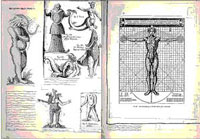
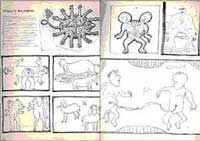
THE EPIC OF WESTERN CULTURE - Dummy Images
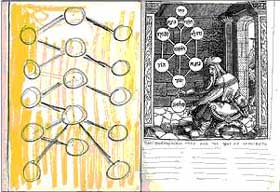 The Porphyrian Tree and the Tree of Sephiroth
The Shock of Babel :
 :
:
Man and Gods :
Deviation and Norm/Curiosity and Sciences :
Communication Machines/Communicating by Light :